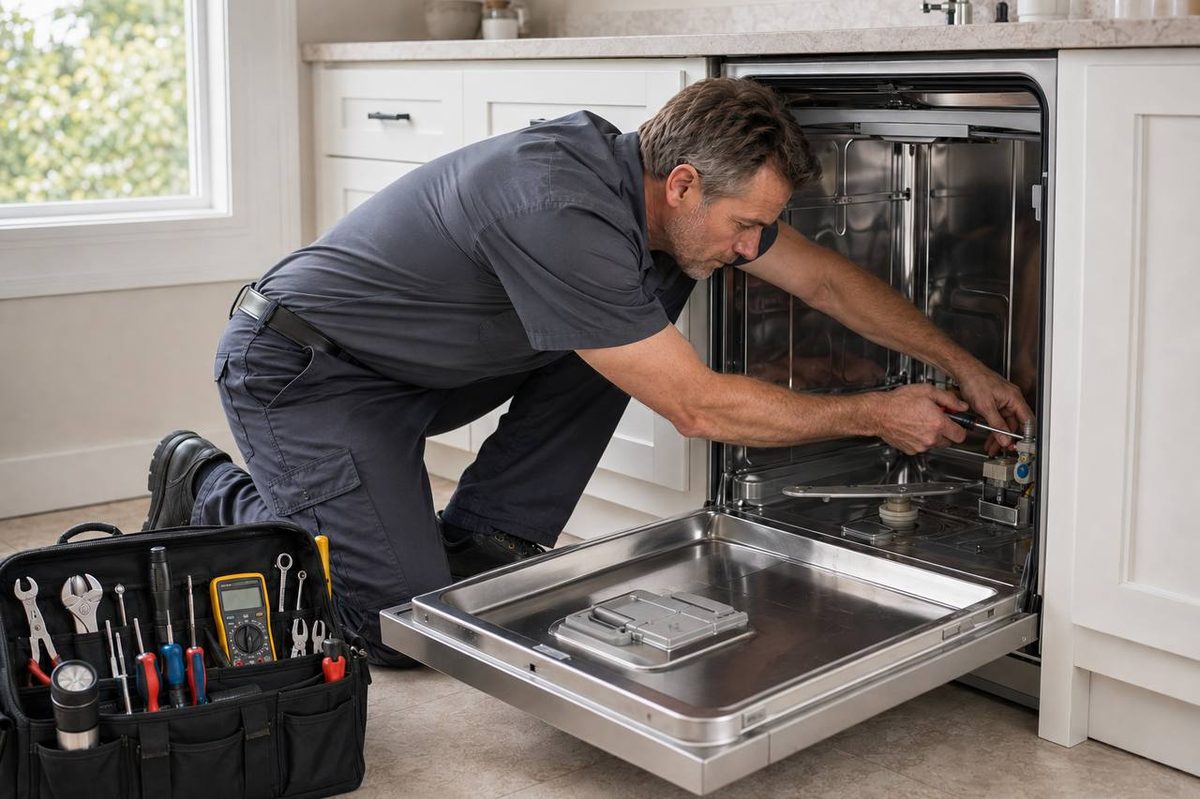
From the Fox Island shop, the harbor is a ten-minute leg with no toll and no Narrows traffic — which is why harbor dryer calls see the truck on weekdays rather than on a route day.
Builder Packages and Propane Burners
On the hill, when your dryer fails, Neil has usually already repaired its identical siblings three doors down — same model, same install year, same fault season — and the truck knows what to carry. Mention the subdivision when you book; it genuinely shortens the visit.
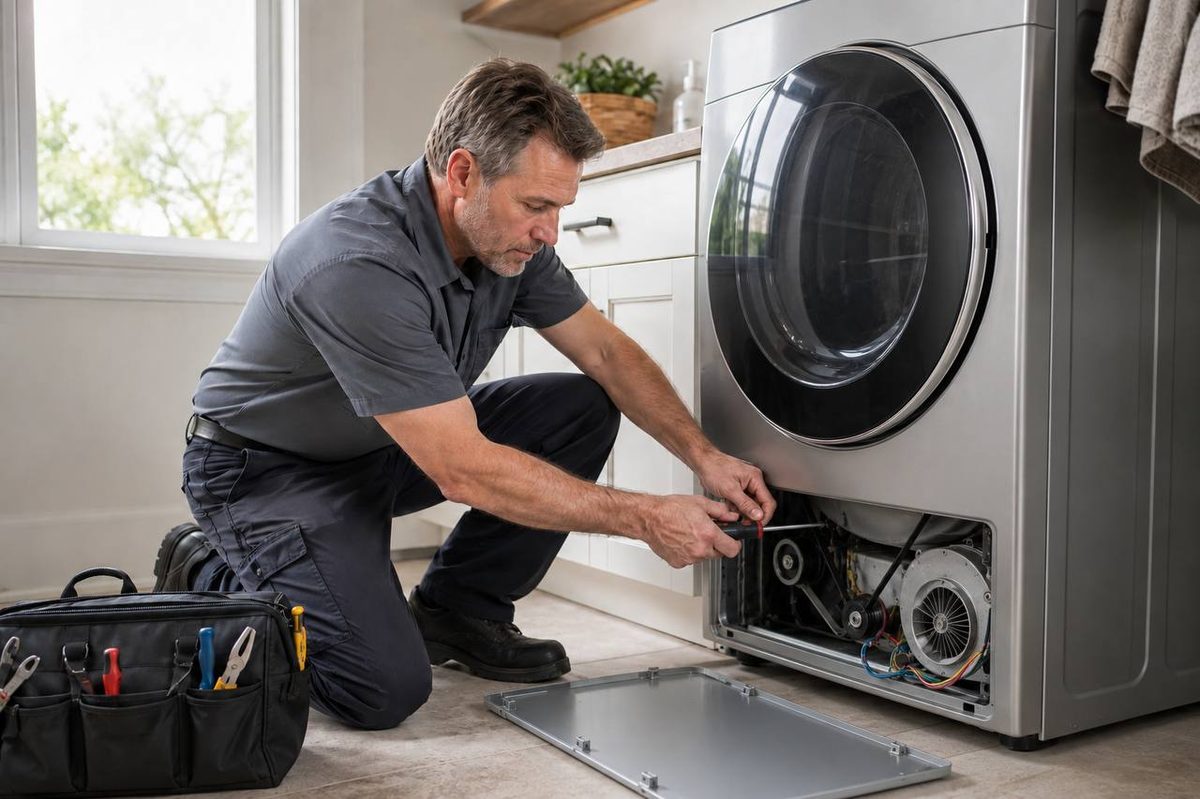
On propane, the story is the burner: a dryer left on natural-gas orifices lights lazy, dries slow and soots the drum. The LP conversion — orifice, regulator, flame check — is a one-visit fix and one of the most common repairs on the harbor.
Waterfront and hillside laundry rooms add the vent question in different forms: shoreline houses terminate vents into salt air that corrodes the hood flapper until it sticks half-open, and hillside houses run ducts the long way down through framing to reach an outside wall. Both get the airflow read at the machine before any heater is condemned, and the visit notes say plainly when the duct — not the dryer — owns the slow-drying complaint.
How it usually starts
- Propane dryer glows, clicks, never lights
- Thump or squeal tied to drum speed
- Thermal fuse gone twice in a year
- Burnt smell on high heat
Dryer visit, Gig Harbor
Tell it like you would over the fence — that is all the form needs.