Propane, Airflow, and the Order Things Get Checked
Most dryer complaints arrive as “it runs but nothing dries,” and the honest answer starts outside the machine. The visit opens with an airflow read at the transition hose and a look at the exterior hood — on the peninsula the hood is under tree cover more often than not — and only then does the panel come off for the element, igniter, thermostats and fuse. A part is named when its reading says so, not before.
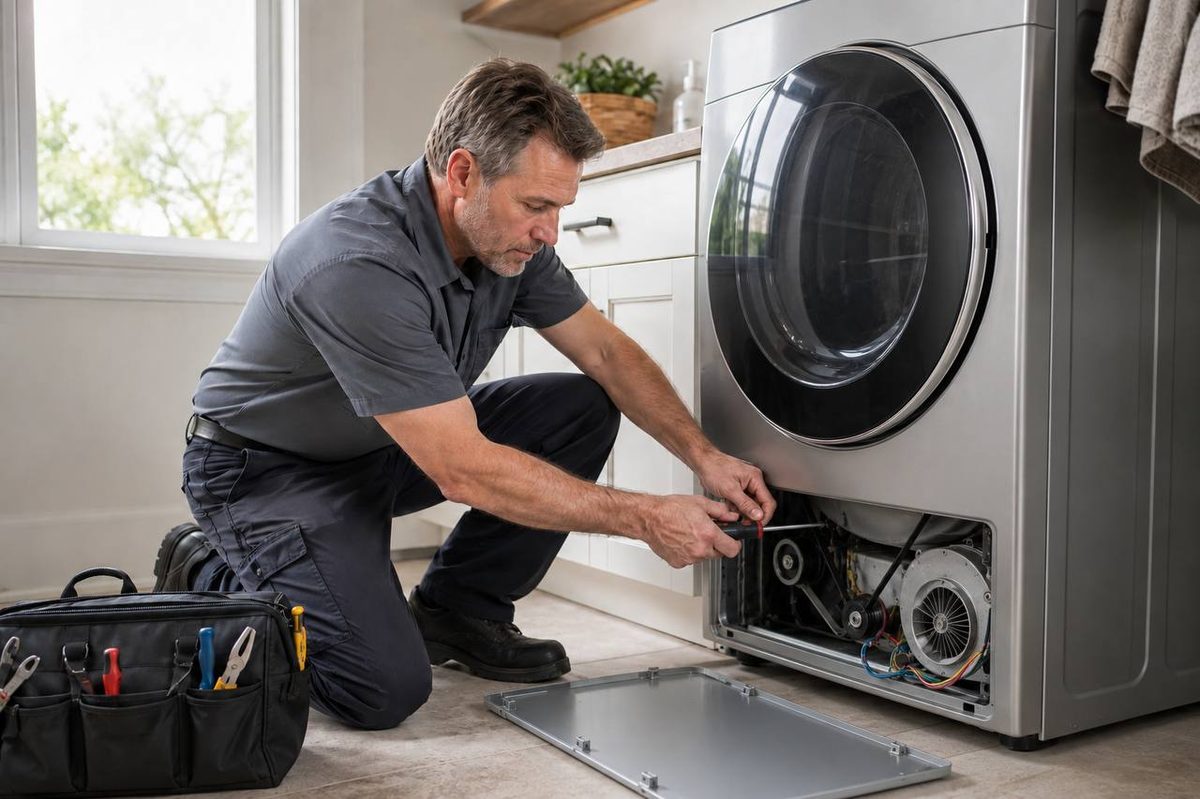
Half the peninsula cooks and dries on propane, and a dryer that came from the store set for natural gas will light lazy, soot the drum or refuse the flame entirely until its orifice and regulator match the tank. Neil carries conversion parts and checks the burner chain on every LP dryer — igniter draw, coil response, flame color — because a mis-set burner is the one dryer fault that gets worse quietly.
Electric dryers get the meter across element, thermostats and fuse against their ratings. Whichever component misses its rating is the one written into the figure; anything that passes stays put. Noise complaints get the drum crew — rollers, idler, belt — inspected together, since they wear together and a lone replacement is a repeat visit in waiting.
Vent work ends at what can be reached from the machine and the outside hood; a buried run through the crawlspace is duct-trade work, and the visit notes say so in ink rather than selling a heater the airflow will kill again by spring.
Heard on the phone
- Clothes damp after a full cycle
- Heat quits mid-load, returns after a rest
- Propane dryer glows, clicks, never lights
- Thump or squeal tied to drum speed
- Thermal fuse gone twice in a year
- Burnt smell on high heat
Book Dryer Service
Model number welcome, plain words fine. Neil calls back with a window.