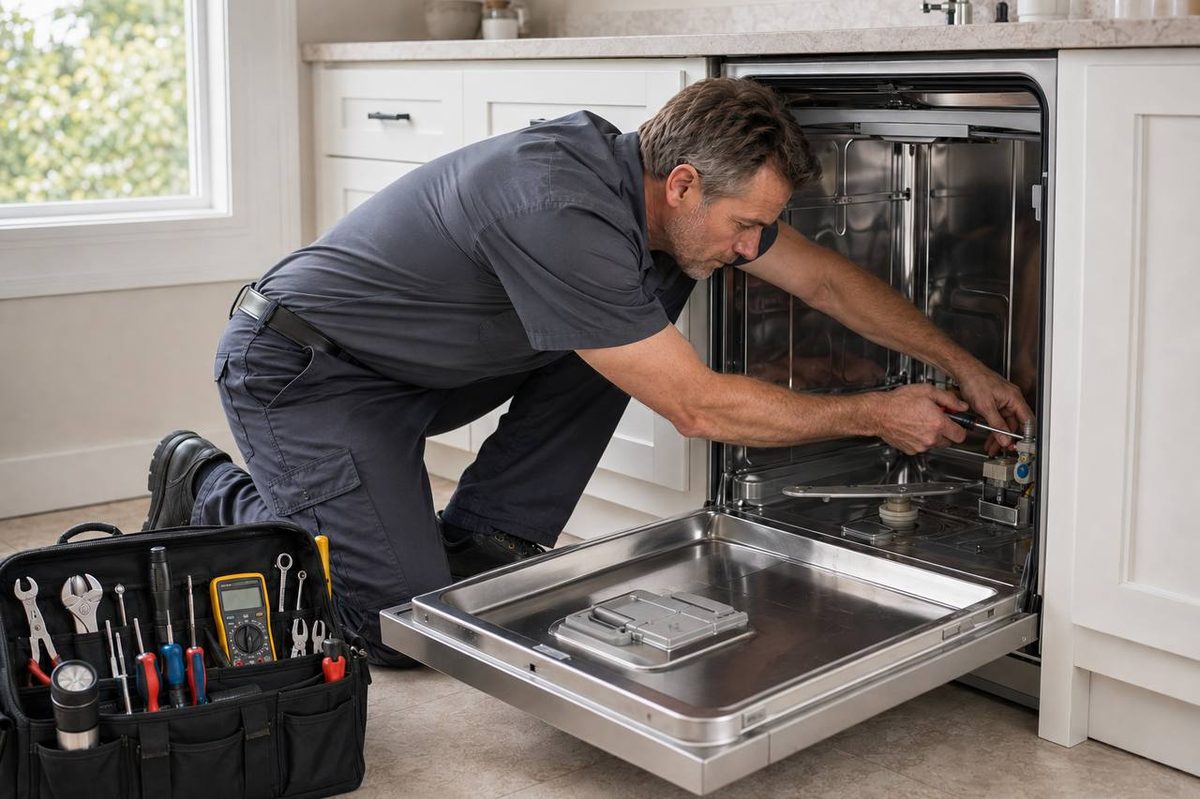
The truck lives on the island, so a dryer that quit on Sunday evening is usually running by Monday afternoon — no bridge decision, no route-day wait.
Propane Dryers, Set Right
A propane dryer that lights late, sounds like a small cough, or dries slow is nearly always still wearing its natural-gas orifice. The conversion is a one-visit job — orifice, regulator, flame check — and it is the single most common dryer repair Neil does on the island. Electric dryers get the meter across element, thermostats and fuse; whichever fails its number is the part that goes on the quote.
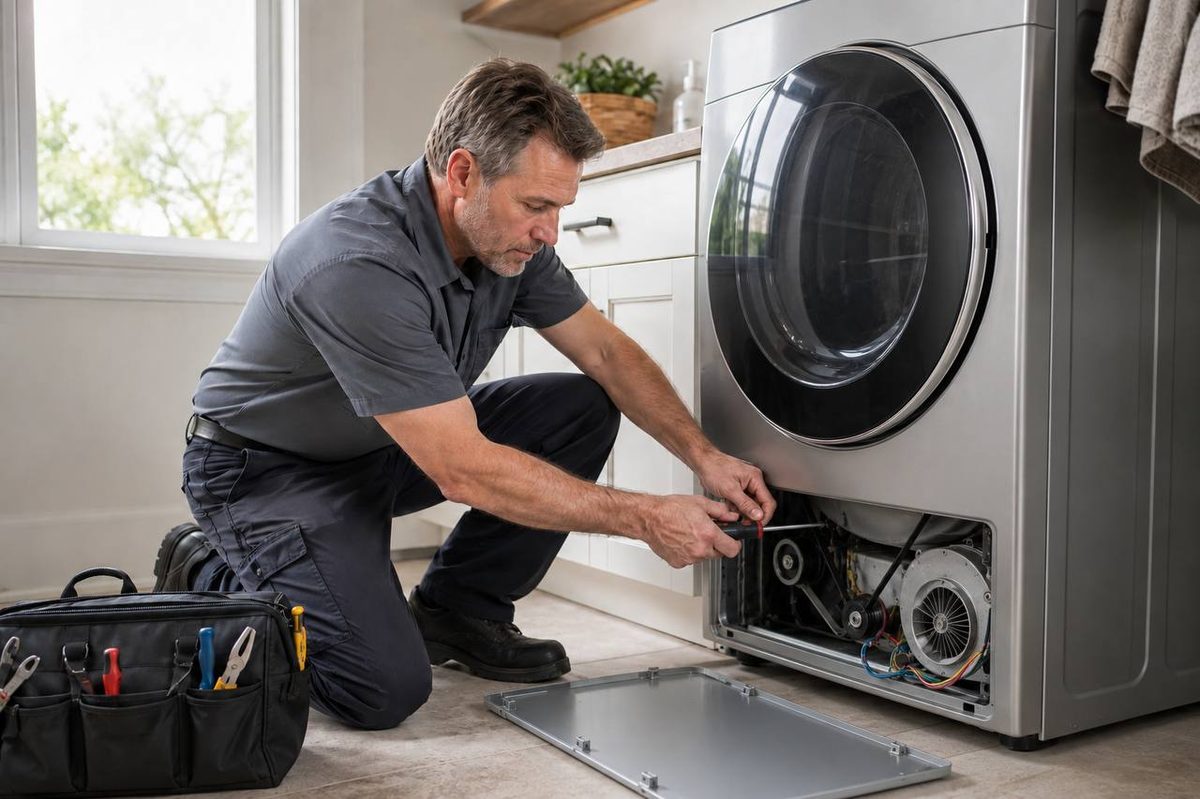
The vent gets read before any of that: airflow at the hose, then the hood outside. Island hoods live under fir and cedar, and a hood packed with needles or a spring nest costs nothing to clear and everything to ignore.
A note specific to weekend houses: a dryer that sits unused for weeks in a damp island laundry room comes back with stiff rollers and a lazy igniter, and the first load of the visit weekend is when it complains. Caretaker-coordinated visits during the week are routine — Neil works with a key-holder, tests a full load, and leaves the notes on the machine for whoever arrives Friday.
Heard on the phone
- Clothes damp after a full cycle
- Heat quits mid-load, returns after a rest
- Propane dryer glows, clicks, never lights
- Thump or squeal tied to drum speed
Dryer visit, Fox Island
Model plate photo speeds things up; plain words work fine.