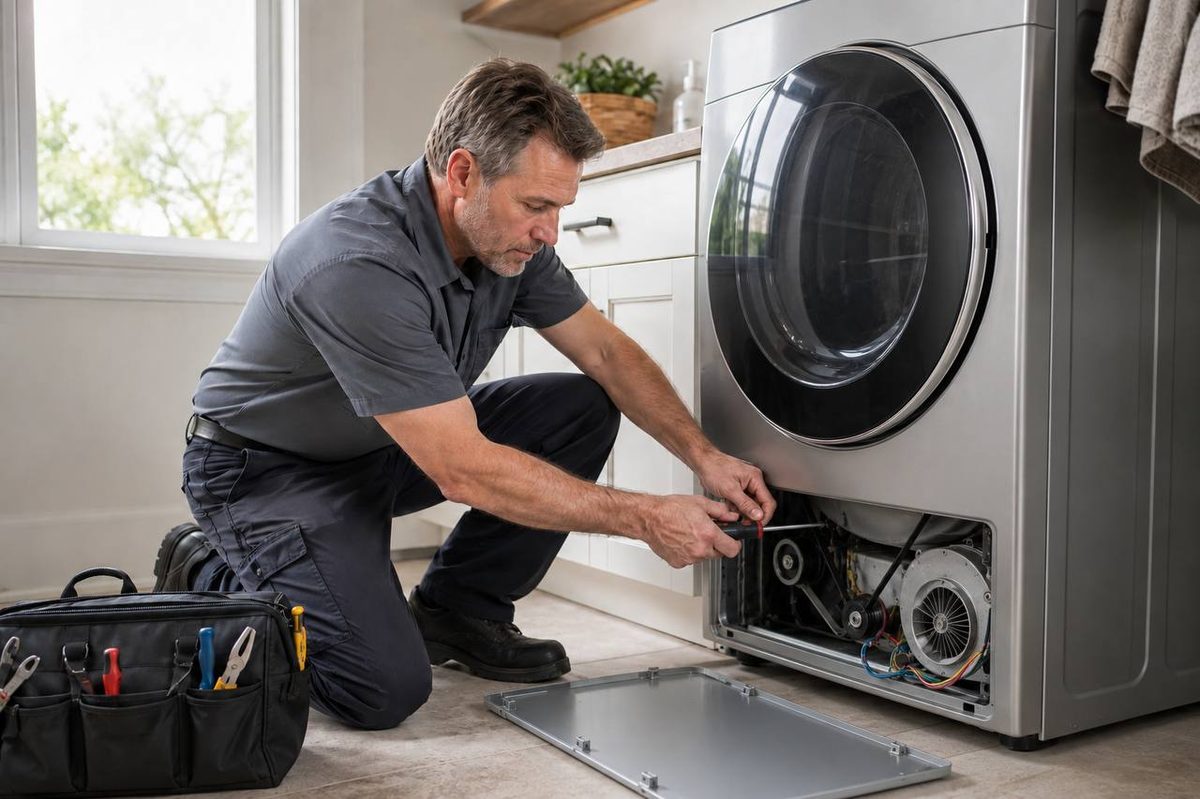
Being based on 6th Ave means a washer that stalls on Tuesday sees a truck on Tuesday more often than not, and a part ordered Wednesday goes in Thursday.
Screens, Iron, and Honest Verdicts
Every island fill complaint gets the inlet screens pulled and photographed. Orange crust means iron and a filtration conversation; white scale means minerals and a valve that will need attention sooner than its mainland twin; clean screens mean the fault is inside the machine and the four-lane read — fill, wash, drain, spin — carries on with the water cleared of blame.

Front-loaders in the island’s newer homes fail on boots and bearings; the top-loaders in the older cottages fail on couplers, lid switches and gearcases. Both get measured, both get a number in ink before a wrench turns, and the old ones are usually worth keeping.
Island plumbing deserves its own line in the notes: many houses run long supply lines from a wellhead or a meter at the road, and pressure at the washer can swing enough to trip a fill-timeout code that looks like a valve failure. Neil checks static and running pressure at the hose bibs on island calls, and when the number says the supply is the problem, the visit says so instead of selling a valve that would fail the same code next month.
Heard on the phone
- Water on the floor mid-fill or mid-drain
- Cycle stalling at one spot, load after load
- Spin loud enough to hear from the deck
- Clothes sopping after a finished cycle
Washer visit, Fox Island
Model plate photo speeds things up; plain words work fine.