The bridge approach at Arletta is the truck’s daily commute, so Artondale dryer calls fill the open slots of most weekdays and part follow-ups land the afternoon the part arrives.
Voltage, Canopy, Propane
A dryer at the end of a five-hundred-foot service can read every symptom of a bad element while its element is fine — supply voltage sagging under load starves the heater and stretches the cycle. Neil measures voltage at the outlet under load on Artondale calls before any part is named, and when the wiring turns out to be the culprit, hands you the readings to give an electrician.
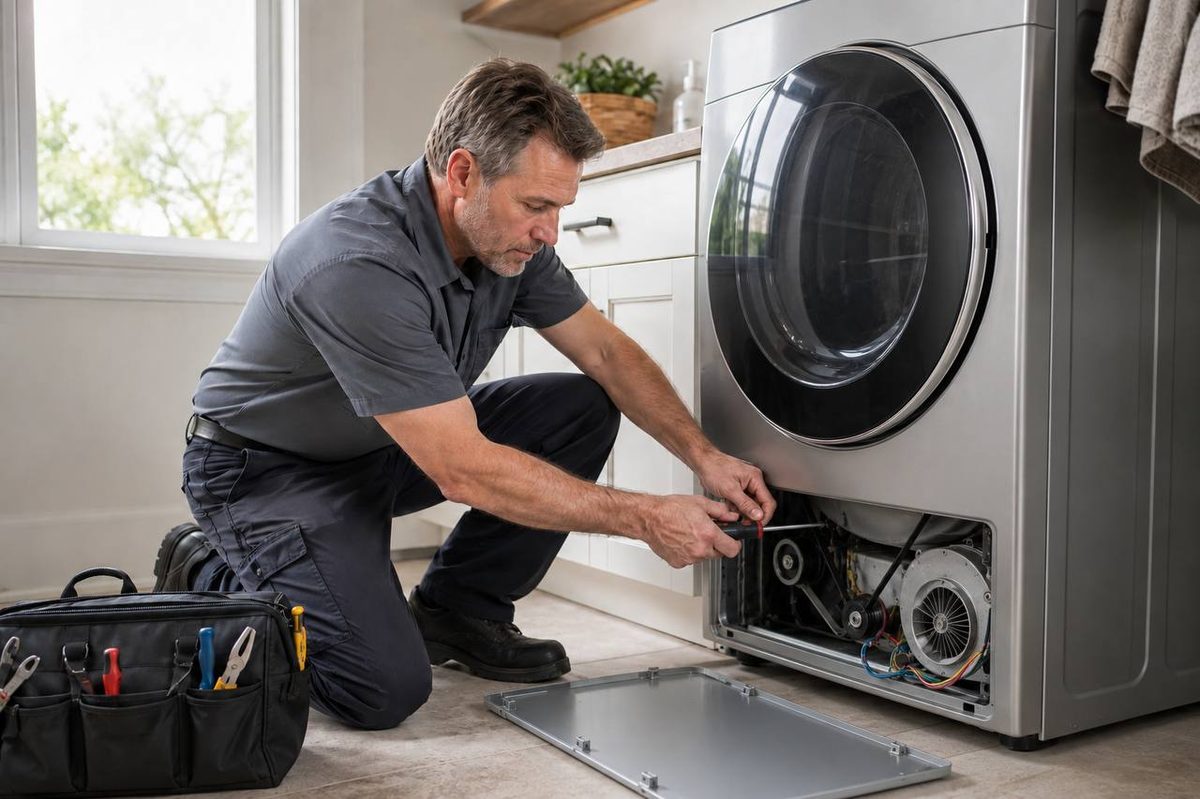
Canopy and propane get their usual turns: the hood cleared and screened, the burner set for the tank it actually drinks from. Between the three checks, most Artondale slow-dry complaints end without a part.
Outbuilding laundry is an Artondale specialty — a washer and dryer in the shop, the barn or the guest apartment over the garage, on a sub-panel fed from the house. Those installs run cold in winter, damp in the wet months, and dusty year-round, which shortens the life of rollers, igniters and terminals. The visit inspects the environment alongside the machine and says plainly which faults the location will keep causing.
First signs
- Thermal fuse gone twice in a year
- Burnt smell on high heat
- Clothes damp after a full cycle
- Heat quits mid-load, returns after a rest
Dryer visit, Artondale
Say what changed and when — the read does the rest.