The bridge approach is the truck’s daily route, so an Artondale cold call is a short hop rather than a mainland company’s peninsula decision.
Outbuildings and Long Services
A freezer in an unheated barn lives outside its cabinet’s rated ambient range for half the year, and its connections live in damp. Outbuilding cold calls get the environment read alongside the machine — condenser, connections, gaskets, the ambient the unit actually sees — and the notes say plainly when a garage-rated box or a different spot would outlast another repair.
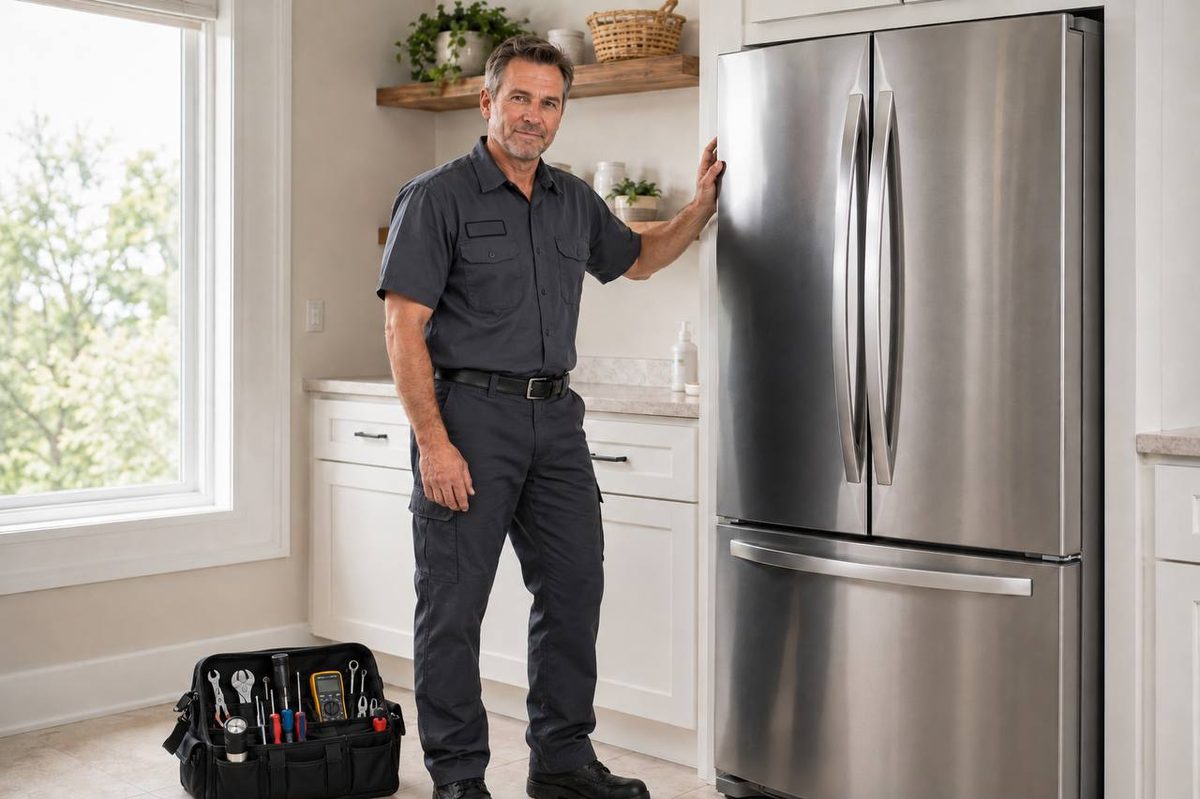
Long rural services sag under load, and a refrigerator at the far end of one can restart badly after every blink. Supply voltage gets measured under load on Artondale calls, and post-outage relay and board failures are read first, because they are the common — and cheap — verdict.
Well water reaches the refrigerator through the ice maker, and on Artondale’s iron-heavy supplies the valve and fill tube mineralize years ahead of schedule. Every Artondale cold call includes a look at the ice path and a frank note about filter cadence — set to the water in the ground, not to the sticker on the cabinet — because an inline filter changed twice as often is far cheaper than the valve it protects.
First signs
- Chest freezer creeping toward 20°F
- Running constantly after a power blink
- Fresh food warm while the freezer holds
- Compressor clicking off every few minutes
Refrigerator visit, Artondale
Say what changed and when — the read does the rest.