Sitting between the island shop and downtown Gig Harbor, Wollochet is on the truck’s line every day — a dryer call here is the easiest add to the schedule.
Garage Dryers, Original Circuits
Damp garages corrode dryer terminals and the moisture-sensor bars, and cold ones make thermostats cycle oddly; both look like heating faults and neither is fixed by an element. The Wollochet read starts at the terminal block and the vent — garage vents here often run a long way to reach an outside wall — before anything inside is condemned.
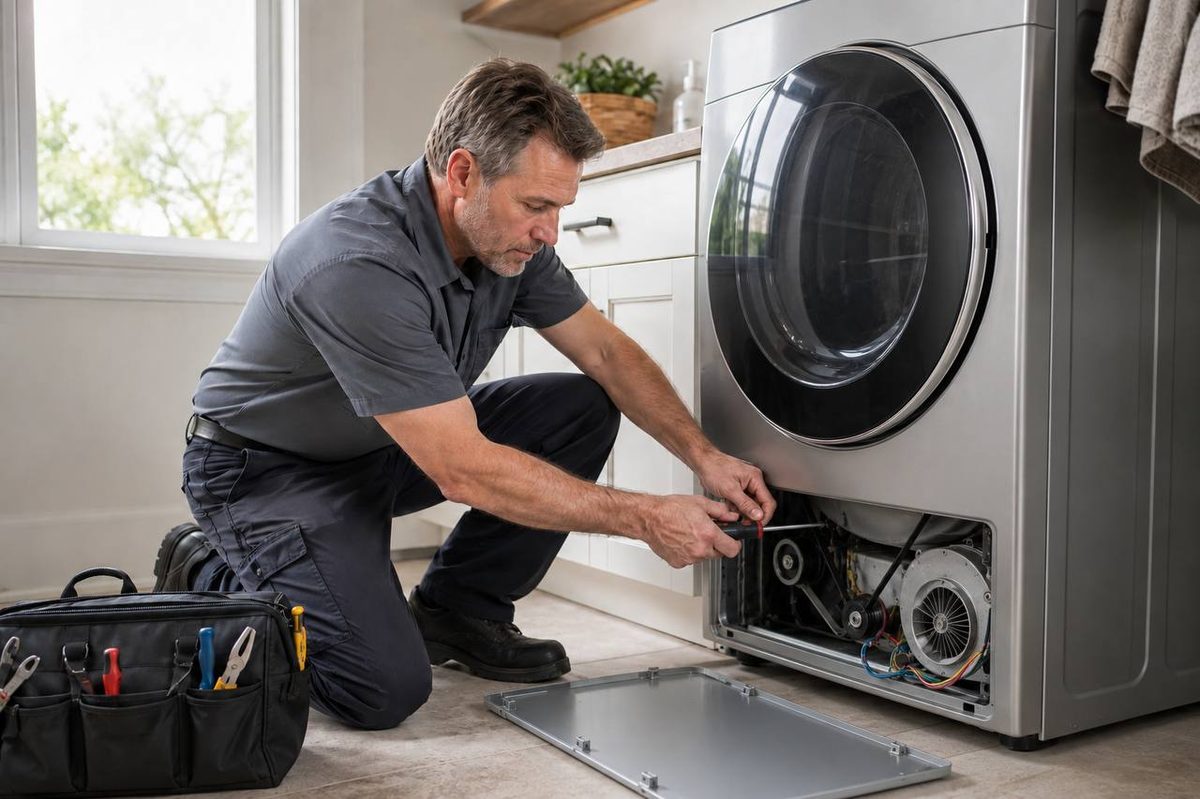
Original 240-volt circuits from the seventies are usually fine, but the receptacles and cords are not: a scorched dryer plug is a Wollochet classic, and the visit checks it every time, because a dryer cannot be repaired around a bad connection.
Point Fosdick’s condo stacks flip the problem: ventless heat-pump dryers behind closet doors, with condensate pumps and fine-lint condensers that nobody told the owner to clean. The lint mat builds slowly, the cycle time creeps, and eventually somebody notices a load taking two hours. A thorough cleaning and a timed test load restore the machine, and Neil writes down the upkeep interval so it does not happen again.
The opening complaint
- Clothes damp after a full cycle
- Heat quits mid-load, returns after a rest
- Propane dryer glows, clicks, never lights
- Thump or squeal tied to drum speed
Dryer visit, Wollochet
A display code, if there is one, pre-loads the truck.