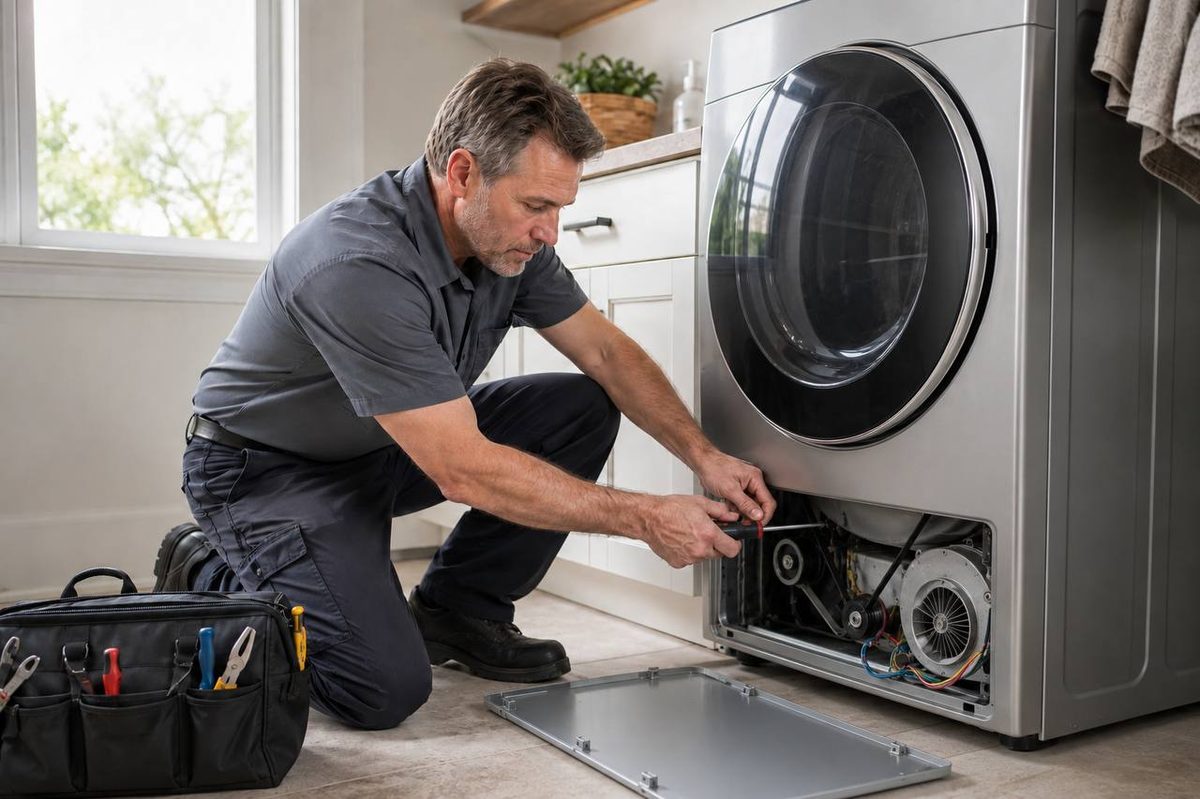
Between the island and the harbor on the truck’s daily route, Wollochet washer calls rarely wait for a slot.
The Wet Half of the Machine
Rubber stiffens and weeps in a January garage; multi-turn bibs from the seventies seize half-open and seep behind the machine for years; inlet valves stressed by cold supply lines stick. Every Wollochet garage washer visit inspects hoses, bibs and valve seats and writes their condition into the notes — and there is no cheaper time to discover a seized bib than with the repair truck already in the driveway.
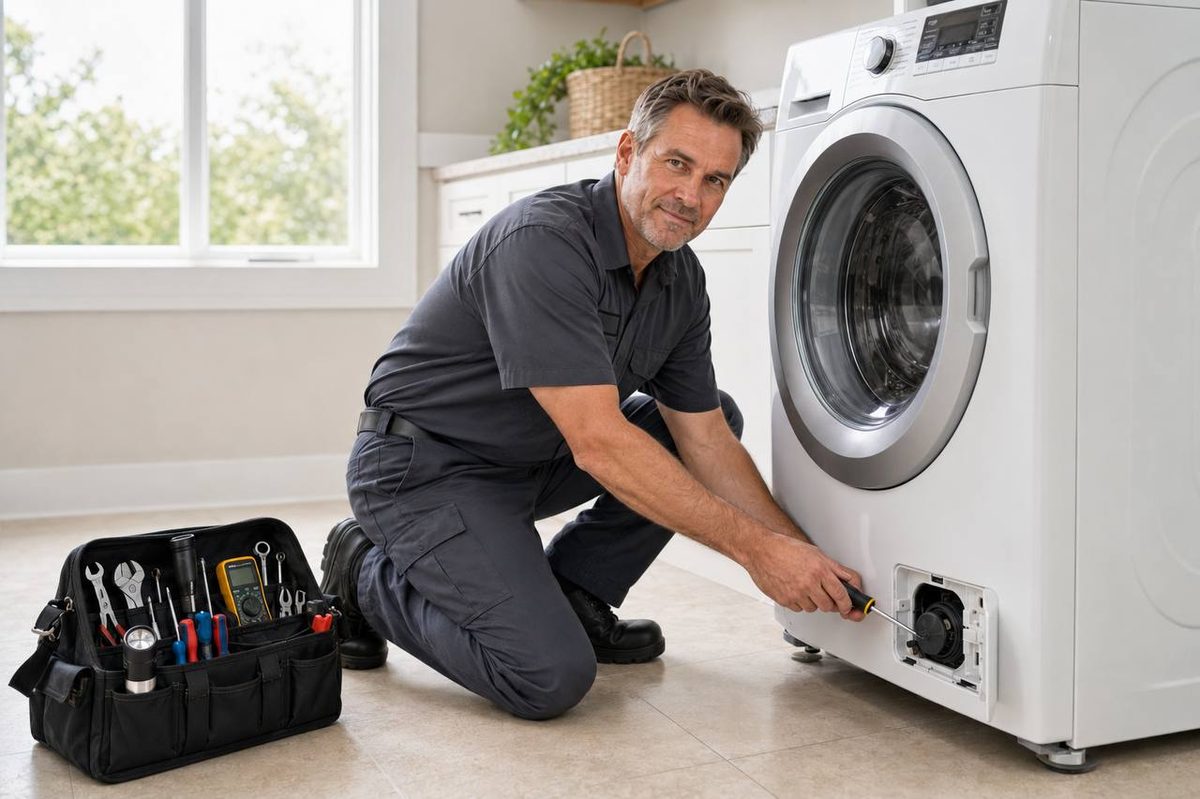
Mechanical faults get the four-lane read — fill, wash, drain, spin — and the parts on the truck are chosen by decade: couplers and lid switches for the older top-loaders, boots and bearings for the newer pairs that replaced them.
Bay-front houses down Wollochet Drive and out at Cromwell add salt to the garage story: connectors green over, cabinet seams bloom rust, and a washer that lived a normal life inland dies electrical at the water’s edge. Repairs on shoreline machines go back together with protected connections as standard practice, and the notes say honestly which parts the salt will come for next.
The opening complaint
- Water on the floor mid-fill or mid-drain
- Cycle stalling at one spot, load after load
- Spin loud enough to hear from the deck
- Clothes sopping after a finished cycle
Washer visit, Wollochet
A display code, if there is one, pre-loads the truck.